Investor mapping for critical-mineral projects

The study gets done. The capital is spent. And then nothing.

Rarely because the geology is weak, and rarely because the capital does not exist. Mines, refineries and recycling plants are financed by substantially different institutions, and most projects approach the wrong set.

Eight questions · two minutes · no drill data or financials required

Seven capital pools · assessed by chain position, stage and round size
The problem

The constraint is institutional fit.

A project can hold a strong resource, a completed study and clear commodity demand, and still fail to raise. Institutional mandates are specific: each has a defined position in the value chain, a stage it will enter at, an evidentiary threshold and an allocation range. A project that falls outside any one of them is screened out before its merits are assessed.

We spent nine months talking to the wrong people before we understood who actually funds a project at our stage. CEO, West African lithium developer

Establishing that fit before an approach is made is the difference between a process that progresses and one that consumes a funded runway.

How it works

Screen, map, approach.

1

Screen

A short screen establishes the project's position against the institutional landscape: chain position, stage, documentation, allocation range and timing. The output identifies which classes of capital are open to the project and which are not.

2

Map

The full mapping sets out named institutions with current mandates, the criteria each applies, the basis on which the project meets them, and the recommended order of approach.

3

Approach

Prepared approach materials for each institution, written to the criteria that institution applies, together with the tools to run and track the process. All correspondence is sent by the project, from its own accounts.

The full chain

From ore body to recycled cathode.

CapVein covers the full chain. Particular weight sits on the midstream — processing, refining and value addition — the stage where value either remains in the producer country or leaves with the concentrate, and where the institutional landscape differs most from upstream mining.

UpstreamMining and concentration. Financed against the resource and its production profile.
MidstreamProcessing, smelting, refining, separation. Financed as industrial capacity against contracted throughput.
DownstreamPrecursor, cathode, metal, magnet. Financed by the industrial buyers downstream of it.
RecoveryTailings, black mass, recycling. Circular-economy funds, public innovation programmes, take-back schemes.
Background

Why CapVein exists.

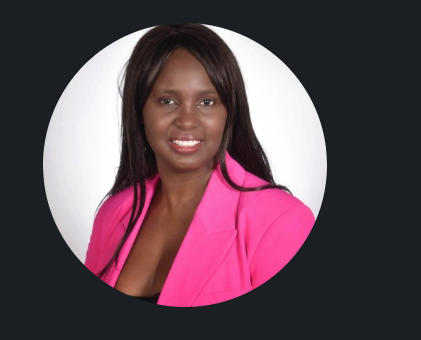
I'm Doris Murphy — Irish–Zambian, and I founded CapVein after working on both sides of this gap: the frontier project trying to get funded, and the institutional standards it gets measured against. Project after project in Zambia — copper, cobalt, lithium — stalled at the same point. The geology was real. The resource was real. The capital existed. And still nothing moved.

What was missing was never the ore body. It was a clear route to the institutions positioned to fund the next stage.

Twenty years of commercial asset ownership in Lusaka informs how CapVein reads African projects and the institutions that fund them. The corridor, and the transition it serves, will be defined by which projects are prepared for capital — not by which minerals are in the ground.

Team

Who we are.

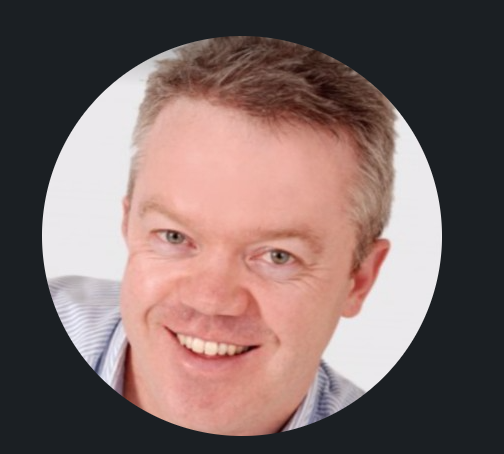
Doris Murphy
Doris MurphyCo-founder & CEO
Stephen Murphy
Stephen MurphyCo-founder & CFO
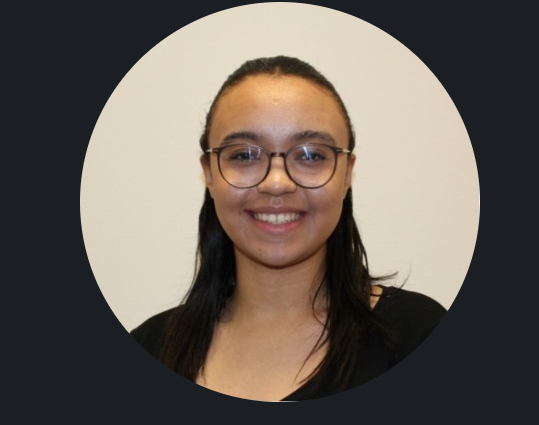
Keshia Murphy
Keshia MurphyCo-founder & Systems Lead

Board and advisers

Our non-executive bench brings senior African mining leadership — board-level experience at a major copper producer and chief executive experience at a state mining investment holding company — alongside academic depth in ore systems science, geometallurgy and AI applied to mining.

We extend it by jurisdiction as coverage grows, adding capital markets and technical expertise across Europe, Canada, the United States and Australia.

Where we work

A global institutional landscape.

The institutions that finance critical minerals operate globally. The same development banks, export credit agencies, royalty houses, strategic buyers and industrial partners that fund a refinery in Zambia are funding a lithium project in Western Australia, a cathode plant in Ontario and a separation facility in Europe. CapVein maps against that landscape wherever the project sits.

We are working first along the Africa–Europe corridor, where the gap between viable projects and available capital is widest and where our own network runs deepest. Coverage extends to Canada, the United States and Australia, across the full value chain from mining and concentration through processing, downstream manufacturing and recovery.

Start here

Start with the screen.

A short screen establishes which classes of capital are open to the project, and which are not. No drill data or financials required.